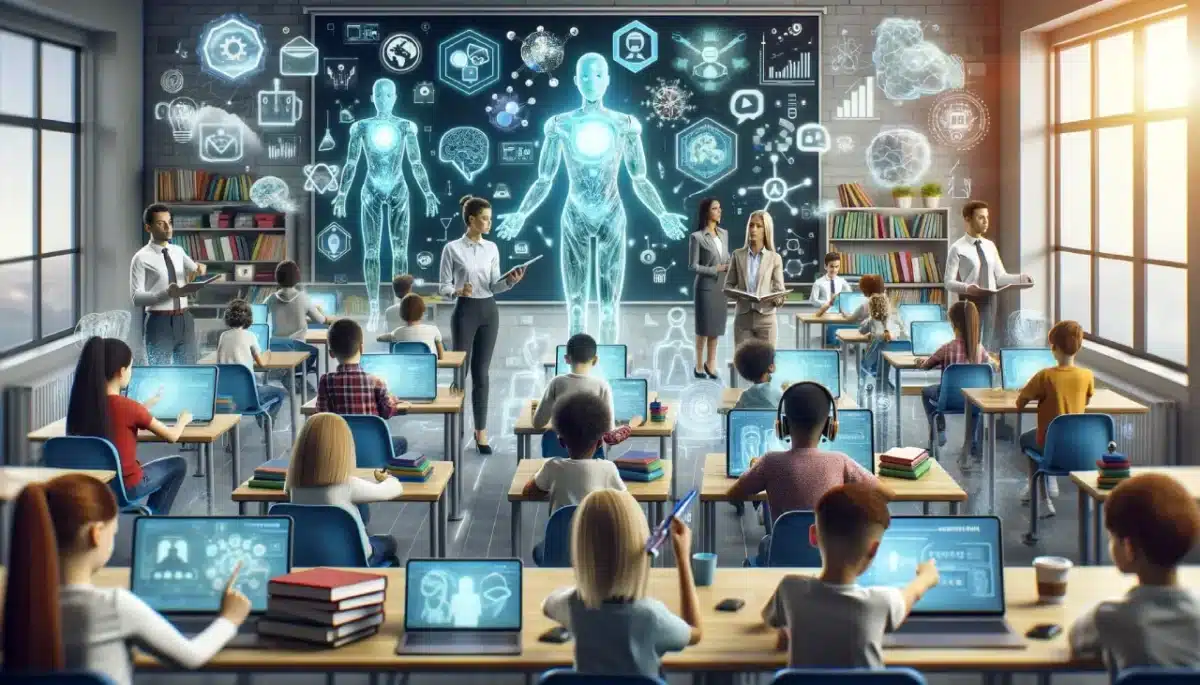
Artificial intelligence is changing education in a way that goes beyond the use of digital tools. It’s not just about studying with a computer or looking for information on the Internet. The main change is in how students learn, write, investigate, solve problems and prepare for a job market where many tasks can already be automated.
For current students, artificial intelligence is part of an environment where almost everything is consulted, compared or processed online; even when reviewing content, services or platforms such as fortune, the habit of interacting with digital systems already influences the way of making decisions. In education, this phenomenon raises a central question: if information and many answers are immediately available, what does it mean to really learn?
Access to knowledge ceased to be the main problem
For a long time, studying involved seeking information. The student had to go to books, notes, libraries or sources recommended by the teacher. That process required time and order. Today, artificial intelligence can summarize texts, explain concepts, compare ideas, translate content, generate schemes and propose examples in seconds.
This changes the center of learning. The problem is no longer finding information, but knowing how to evaluate it. A student can get a quick explanation on a topic, but must understand if that explanation is correct, incomplete, or too general. Artificial intelligence can help, but it can also produce errors, simplifications, or answers without context.
Therefore, current education needs to train students with criteria. It is not enough to ask a tool well. You have to know how to contrast, verify sources and recognize when a response seems convincing, but it is not well substantiated.
The student has more support, but also more dependency
One of the advantages of artificial intelligence is that it allows you to customize the study. A student can ask for a simpler explanation, request exercises, correct a text, practice a language, or review the steps of a problem. This can be useful for those who need to advance at their own pace.
Before, the support almost always depended on the teacher, a tutor or classmates. Now, the student can receive immediate guidance. This availability reduces barriers and can improve autonomy. However, it also creates a risk: relying too much on the tool.
If the student uses artificial intelligence to avoid thinking, writing or solving, learning weakens. You can deliver tasks, but not develop skills. The difference between using technology as support and using it as a replacement is one of the most important issues in current education.
Academic writing is changing
Artificial intelligence has transformed the way students write. It can help you order ideas, improve the structure of an essay, correct errors, propose titles or summarize arguments. This allows you to work more quickly and can raise the formal quality of many texts.
But it also raises questions about authorship. If a tool writes much of a job, which part belongs to the student? How is your understanding evaluated? What does writing mean when a machine can produce complete paragraphs?
The answer should not be to reject all technological help. Writing has always used tools: dictionaries, correctors, manuals, search engines. The difference is that artificial intelligence not only corrects, but also generates content. Therefore, educational institutions must establish clear rules. Students need to know when their use is acceptable, when it should be declared, and when it becomes academic fraud.
Traditional evaluation loses strength
Traditional exams and assignments were designed for a world where the student worked with limited resources. Today, many exercises can be solved with automatic help. This forces you to rethink the evaluation.
If a task consists only of defining concepts, summarizing texts, or answering basic questions, artificial intelligence can easily do so. For this reason, the evaluations should focus more on analysis, oral defense, application to specific cases, projects, processes and reasoning.
The teacher can no longer evaluate only the final result. You must observe how the student came to that result. Drafts, decisions, sources, arguments and revisions become more important. Education should measure thinking, not just the finished product.
The role of the teacher becomes more strategic
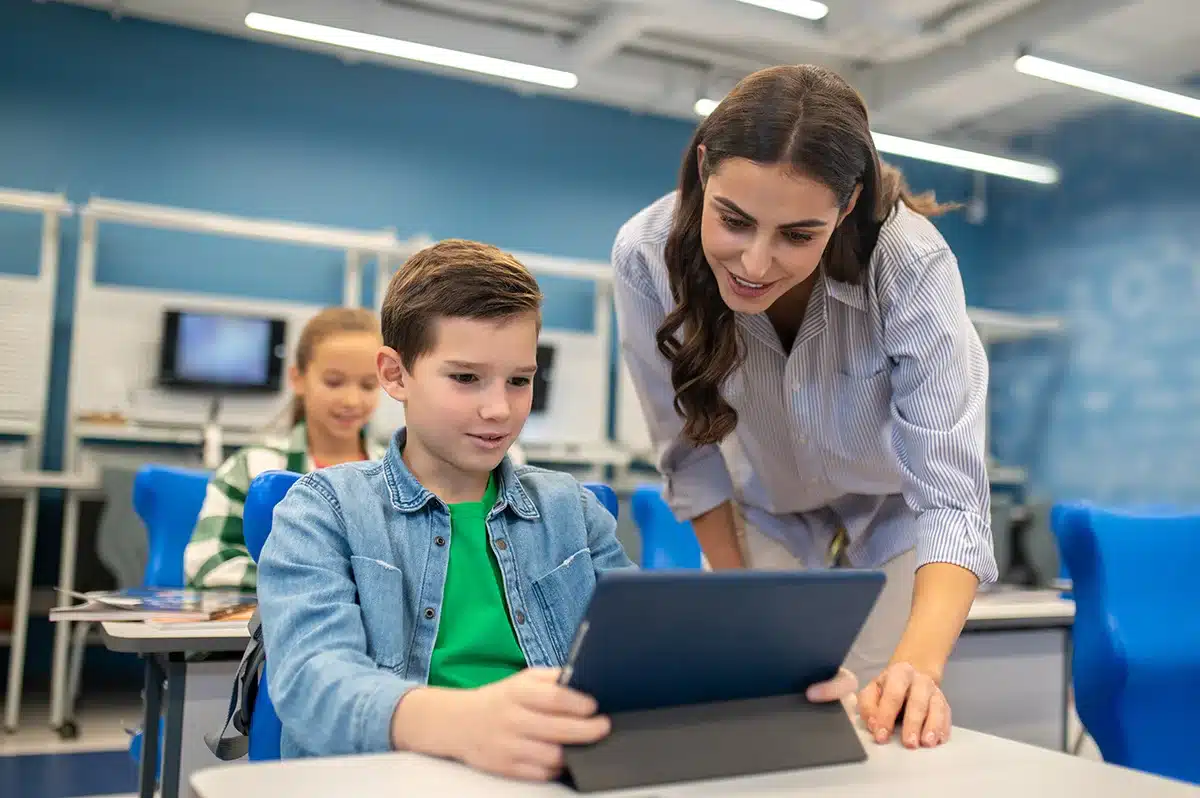
Artificial intelligence does not eliminate the need for teachers. On the contrary, it makes your role more important. The teacher ceases to be the only transmitter of information and becomes a guide to the criteria, method and interpretation.
A teacher can teach how to ask better questions, detect errors, compare answers, build arguments, and use tools ethically. It can also help students understand the limits of automation.
In this new context, the teacher does not compete with technology. Its function is to teach how to use it without losing its own thought. The educational authority is no longer based solely on knowing more data, but on knowing how to guide learning in the midst of too much information.
New skills for the future job
Artificial intelligence also changes what students must learn to work. Many repetitive tasks will be automated or assisted by digital systems. Therefore, the most important skills will be those that combine technical knowledge with human judgment.
Students will need to know how to interpret data, communicate ideas, solve problems, work with teams, ask questions, review results and make decisions. They should also understand how the tools they use work, even if they are not specialists in programming.
Education can no longer be limited to memorizing content. You must prepare students to collaborate with intelligent systems, supervise processes and provide criteria where automation is not enough.
Digital divide and educational inequality
Although artificial intelligence offers opportunities, not all students access it under the same conditions. Some have better devices, stable connection, digital training and teacher accompaniment. Others use tools without guidance or cannot access full versions.
This can increase inequalities. Those who know how to use artificial intelligence with criteria advance faster. Those who only copy answers or do not have adequate access are at a disadvantage. Therefore, schools and universities must teach the responsible use of these tools, not assume that all students already know how to do it.
Conclusion
Artificial intelligence is changing education because it modifies access to knowledge, writing, evaluation, the teaching role and the skills necessary for the future. Its impact is not only technological; It is also pedagogical and cultural.
For today’s students, the challenge is not to avoid artificial intelligence, but to learn to use it without losing intellectual autonomy. The education that comes should teach less mechanical repetition and more criteria, analysis, ethics and decision-making capacity. In a world where the answers appear fast, the real difference will be in knowing what to do with them.