Since ancient times, Fear has been a central emotion in artistic creation. Humans have represented their fears in cave paintings, ritual masks, and sculptures of terrible gods. Over the centuries, the horror moved to the canvases and later to narrative media such as comics, where he found an ideal space to expand.
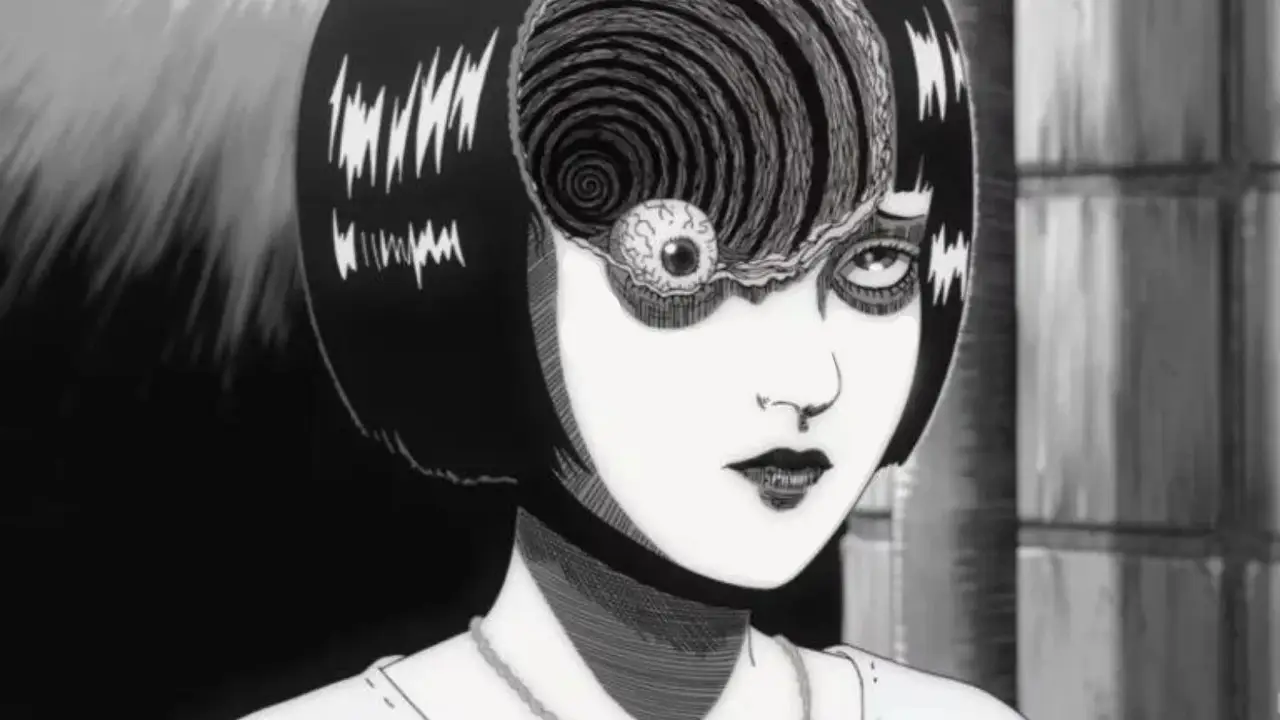
Graphic art allowed to explore the grotesque and the disturbing without restrictions, creating a new way of connecting with the viewer. Within these manifestations, works such as the Uzumaki manga They became a benchmark to understand how visual horror can shake the reader.
Obviously, it has been made clear that drawing can convey as much or more fear than traditional cinema or literature. Thus, graphic narrative was consolidated as a medium capable of generating experiences as intense as any other artistic expression.
What works of art represent fear?
Art has always been a mirror of collective emotions. Fear, in particular, has manifested itself at different historical moments:
- In the Middle Ages, the representations of hell in frescoes and churches showed demons devouring souls, a moral and religious warning.
- In the Renaissance, although beauty prevailed, disturbing paintings also emerged such as “The Garden of Delights” by Hieronymus Bosch, where hybrid creatures caused confusion.
- In Romanticism, works such as “The Walker on the Sea of Clouds” by Caspar David Friedrich transmitted the smallness of man in the face of the unknown.
- Already in the 20th century, painters such as Francis Bacon shaped distorted faces and fragmented bodies that embodied modern anguish.
In each era, horror found its way of becoming visible. It was not just about scaring, but about reflecting what societies feared: divine punishment, the supernatural or even the human condition itself.
The beginnings of horror in the illustration
Before the comics industry existed as such, the engravings already fulfilled a narrative function. Artists such as Francisco de Goya in his series “Los Caprichos” and, above all, “The disasters of war”, showed scenes that oscillate between the tragic and the grotesque.
In the 19th century, the Enlightenment accompanied stories of literary horror. Works by Edgar Allan Poe were published with images that intensified its dark atmosphere. Later, in the newspapers and magazines of the 20th century, the first horror comics began to emerge with pulp overtones, full of monsters and killers.
The rise of horror comics in the 20th century
With the consolidation of comics as a mass medium, especially in the United States, publications emerged that exploited the macabre. Publishers like EC Comics released titles that included zombies, vampires and serial killers, unleashing so much Fascination as controversy.
However, censorship forced to limit these publications. It was then that Japan and Europe found new paths for graphic horror, each with their own styles. While in Europe there was a bet on an expressionist stroke, in Japan the artists developed a more visceral language, which would eventually become in a world reference.
Japan and the transformation of graphic terror
The Japanese manga took influences from local horror cinema, kabuki theater and folk literature. Authors like Kazuo Umezu introduced Stories of ghosts and curses that marked generations of readers.
Later, Junji Ito emerged, who revolutionized the genre with an aesthetic that combined the meticulous with the disturbing. His accounts of inexplicable curses, corporal deformations and collective obsessions positioned him as a key figure.
Works such as “Tomie” and especially “Uzumaki” took to the extreme the idea that graphic horror not only seeks to scare, but also deeply discomfort.
What are the 10 best graphic horror works of art?
Although making a list always involves debate, several works have left an indisputable mark on the industry:
- “Tales From the Crypt” – pioneer in the American horror comic.
- “Creepy” – a magazine that promoted macabre narrative in the sixties.
- Mike Mignola’s Hellboy – a unique mix of mythology, action and horror.
- Neil Gaiman’s “Sandman” – although closer to the dark fantasy, redefined the gloomy in the comic.
- Garth Ennis’ “Crossed” – extremely violent, pushed the genre to the limit.
- Alan Moore’s “From Hell” – a reinterpretation of Jack the Ripper’s crimes.
- “Locke & Key” by Joe Hill and Gabriel Rodriguez – a contemporary story of haunted houses.
- Junji Ito’s “Tomie” – the endless story of an immortal woman who causes madness.
- Junji Ito Uzumaki – The spiral as a symbol of inevitable terror.
- “30 days of night” – Vampires in a sunless town, a terrifying premise.
Each of these works showed that graphic horror can be as diverse as cinema or literature.
grotesque artists and their contribution
The question about who are some grotesque artists leads to names that have made horror their personal stamp. Among them are:
- Hieronymus Bosch, whose medieval surrealism filled the canvases with impossible monsters.
- Francisco de Goya, with his visions of nightmare in “Saturn devouring his son”.
- Edward Gorey, master of the macabre illustration with an apparently childish style.
- H.R. Giger, creator of the biomechanical creatures that inspired “Alien”.
- Junji Ito, whose detailed stroke manages to bother, even without resorting to explicit violence.
These artists show that the grotesque can be as powerful as the beautiful, and that Fear is a legitimate artistic emotion.
Is terror a theme in art?
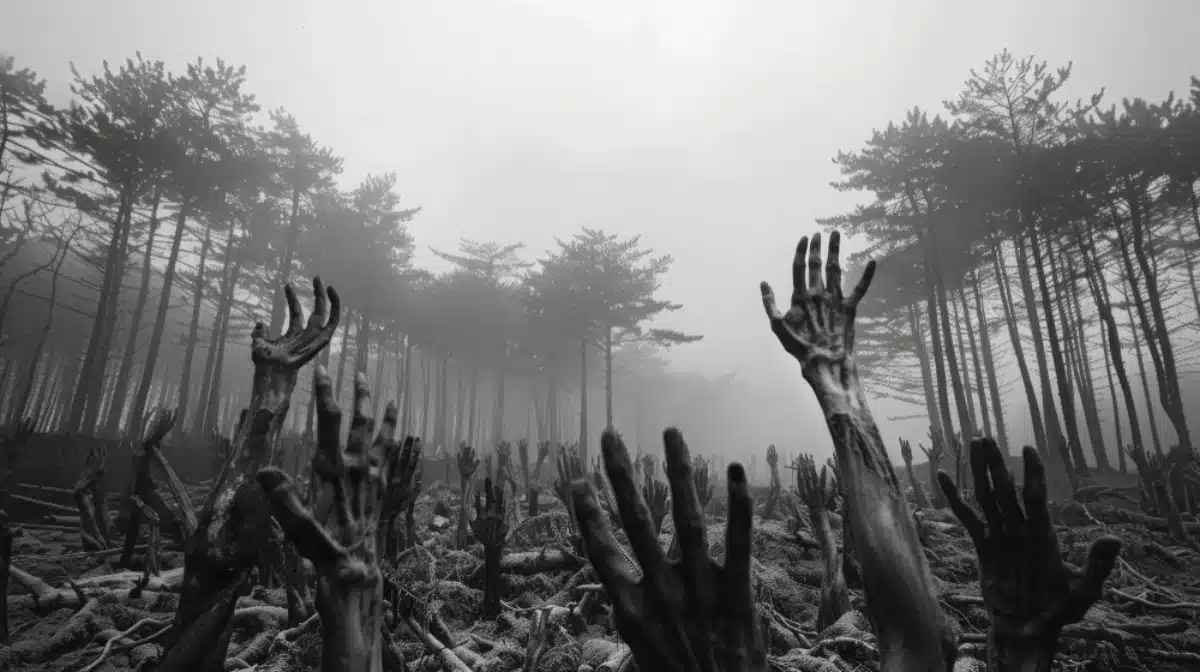
Definitely yes. Terror in art is not reduced to a minor genre, but rather functions as a vehicle to explore the unknown. It represents what is beyond reason and what society fears to accept. Terror too It serves as catharsis: Looking at a disturbing painting or reading a disturbing comic, the viewer faces his own fears in a safe space. so, Art not only terrifies, it also liberates.
The permanence of horror in visual culture
Today, graphic horror works influence cinema, series and even video games. The monsters that previously lived in the pages of a comic now come to life in audiovisual adaptations. Recent examples show how Junji Ito or Alan Moore’s stories remain a reference for contemporary creators.
This shows that fear does not go out of style, it just changes shape. The black and white stroke of a comic can be as striking as the more sophisticated special effects.
final perspective
The works of graphic horror that marked the industry left a mark that was difficult to erase. From Goya’s engravings to Junji Ito’s spiral stories, fear has been a creative engine capable of generating imagery unforgettable.
The art of terror reminds us that not everything must be beautiful to be valuable. The grotesque, the strange and the disturbing also have a place in cultural history. Thanks to this, generations of readers and viewers continue to face their fears through pages drawn, finding in the sinister a form of reflection and, paradoxically, company.