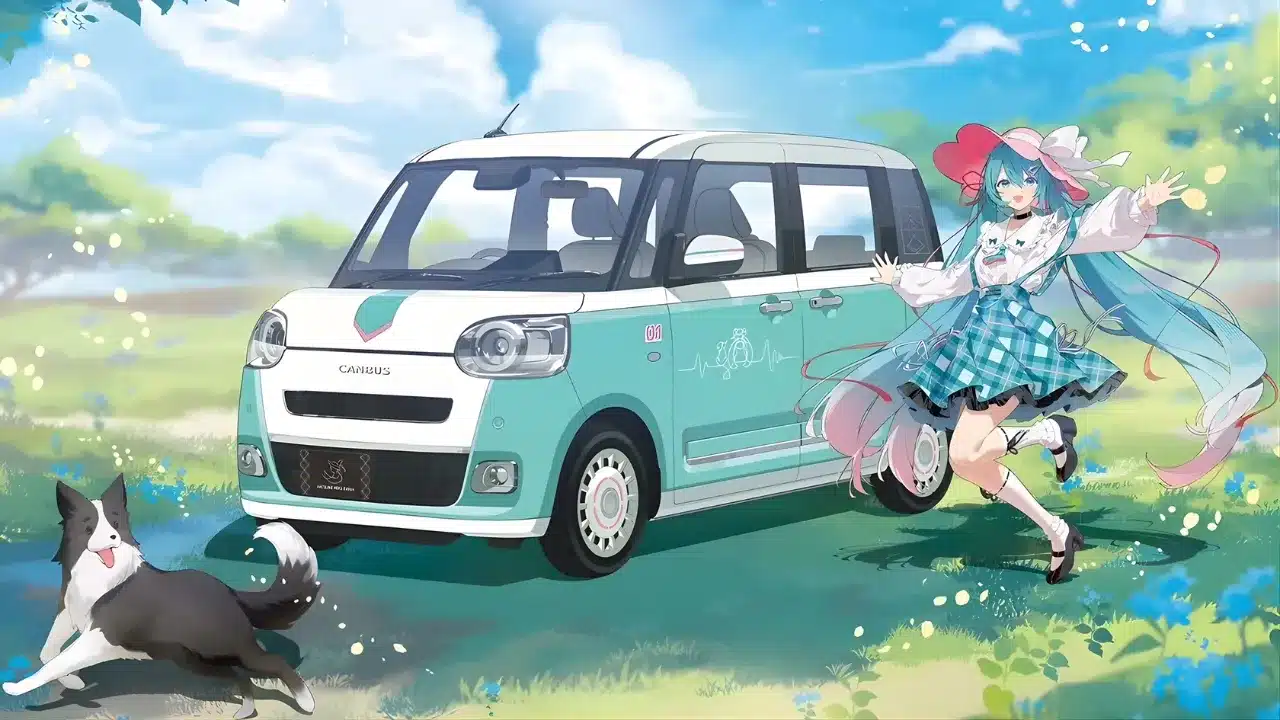
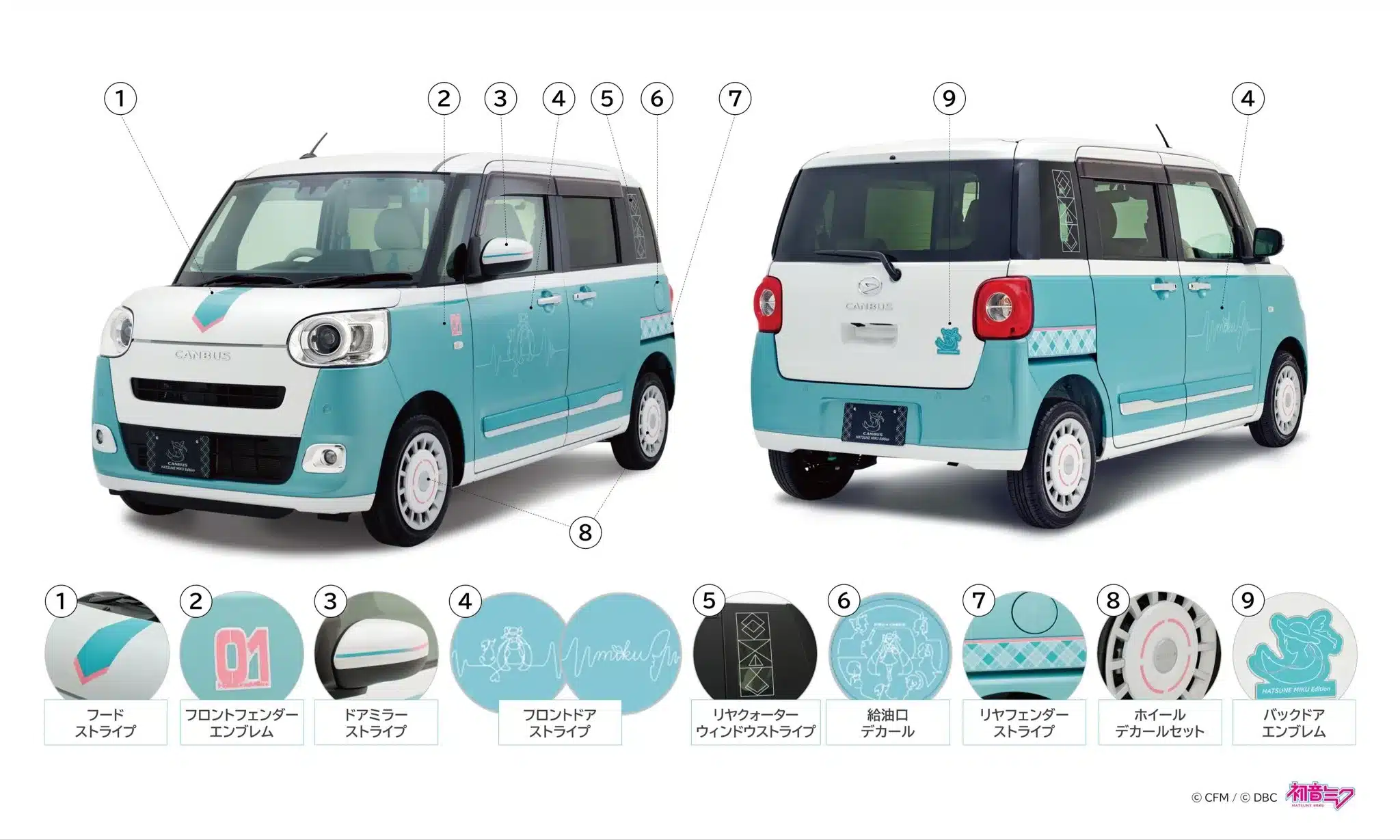
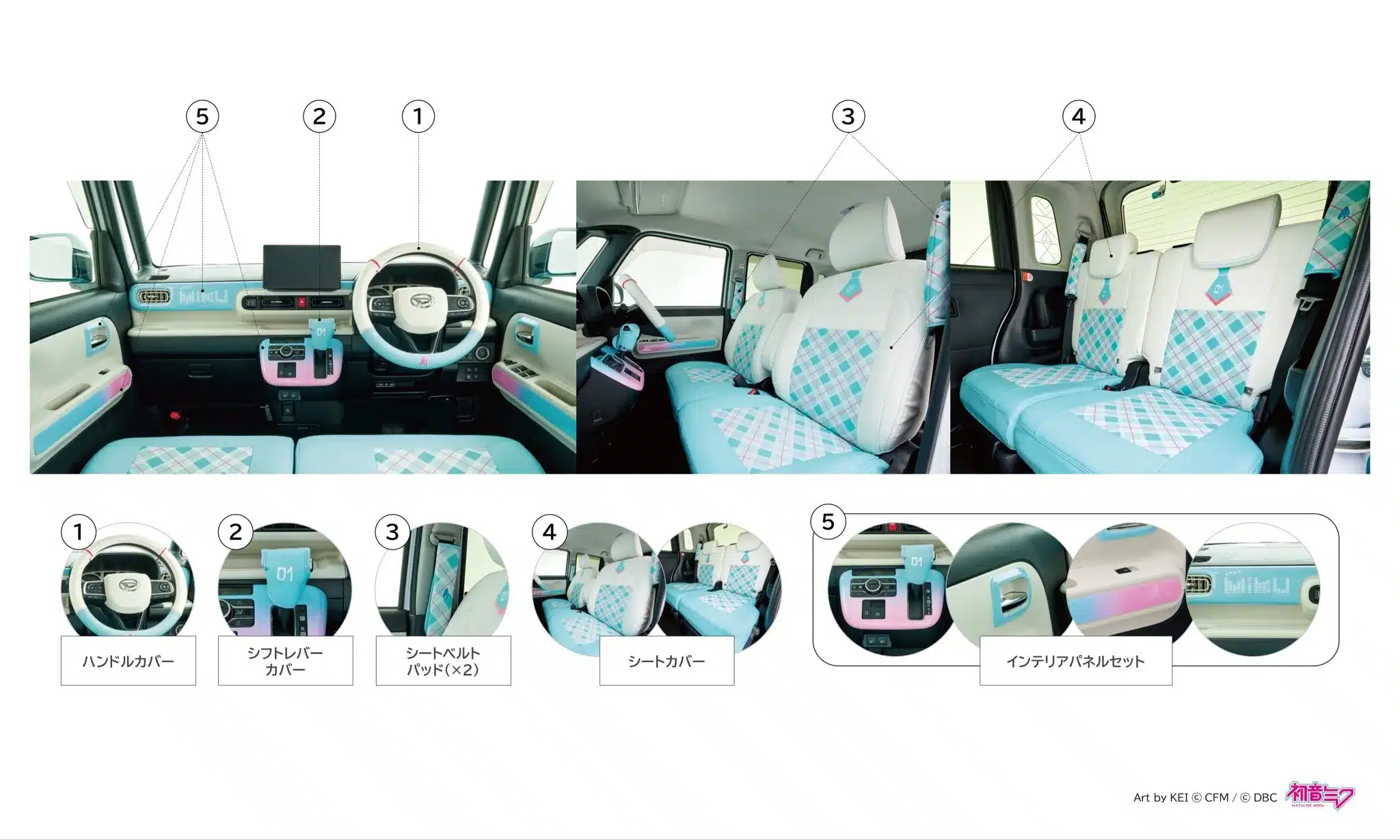
A Japanese automaker introduced the official kit Move Canbus Hatsune Miku Edition, also known as Miku Canbus 2. This proposal allows fans transform a common vehicle into a real mikumobile. The package costs approximately $1,645. Offers a fully-themed experience with seat covers inspired by miku, Pastel interior finishes and exterior accessories decorated with a community-designed picnic motif. It is an official collaboration that combines aesthetics, pop culture and automotive customization in a single launch.
In a year marked by collaborations as striking as a Huge two-meter PC gamer or popular video game appearances, An inevitable question arises: why is this accessory for a small, practical city car considered one of Miku’s most extravagant official collaborations? The answer lies in the strategy that has turned the virtual idol into a cultural phenomenon: transforming everyday objects into iconic pieces. How does the Miku brand achieve that something as common as an urban car becomes an extreme declaration of identity and style? We analyze it.
The integration of otaku culture in functional urbanism
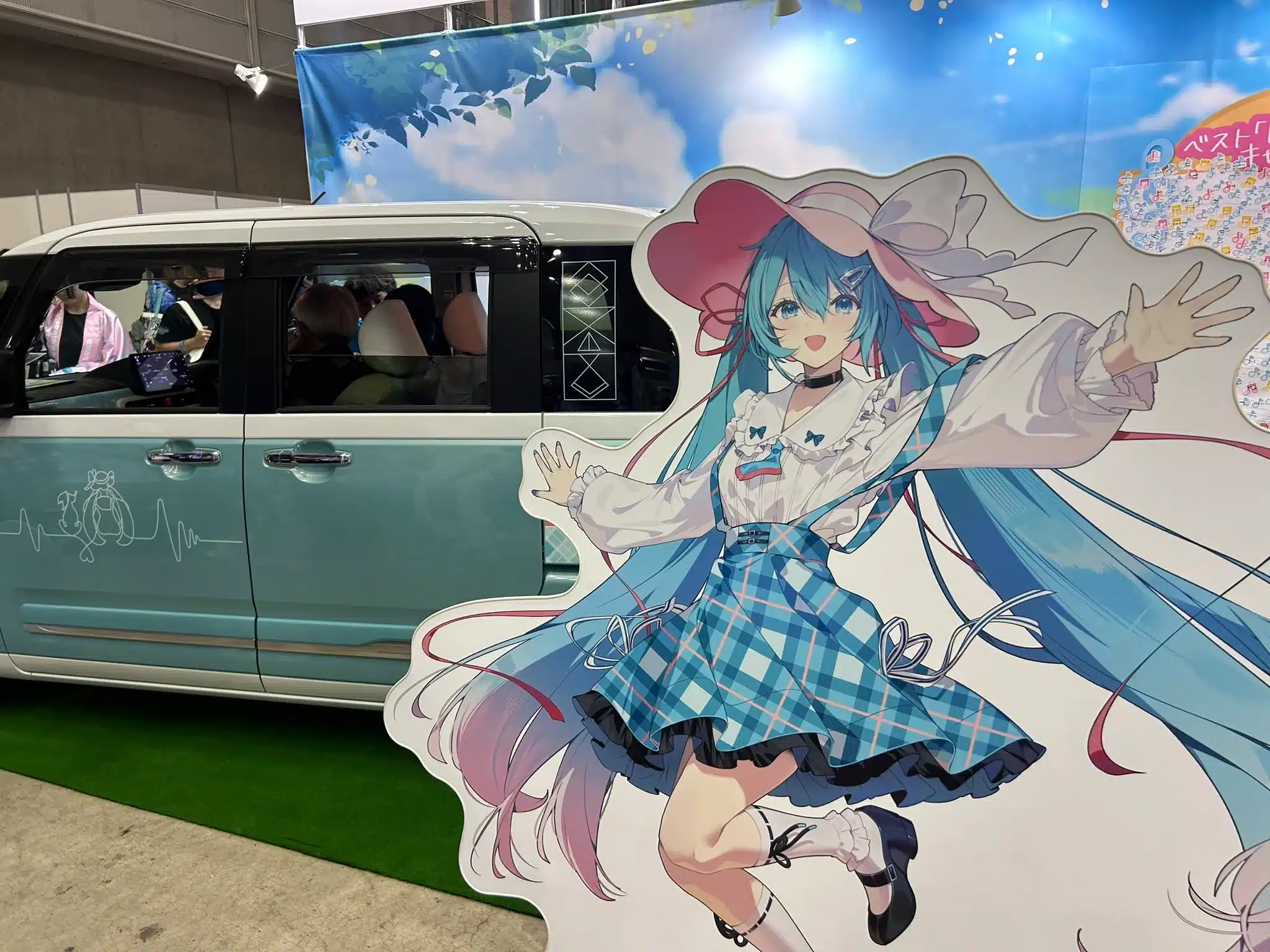
the fandom of Miku It has always connected with a generation that values the functionality and rhythm of Japanese urban life. for that, The decision to customize a car for everyday use is ingenious. It also redefines the way otaku culture presents itself to the world. The mikumobile It is not designed to be exhibited in showcases or to circulate only in conventions. It is a vehicle that goes to work, to the supermarket and picks up friends. In addition, it mixes with the daily routine. By doing it, Turns the fans into a visible and permanent presence in the public space. This expression is more powerful than any collectible piece stored at home.
Those of us who have followed the evolution of anime merchandising recognize what this leap represents. Moving from niche objects to a functional and high-value product such as a car signals the maturity of the market and the growing willingness of fans to invest in what defines their identity. The mikumobile It’s not just an accessory: It is the testimony of a fandom that has ceased to be a subculture to become an everyday language.
The collaboration that turns Hatsune Miku into a lifestyle on wheels
the collaboration of Miku It is not limited to selling an automotive accessory; is marketing a lifestyle. The mikumobile It is presented as the ideal vehicle for fan meetings, outings with friends and the small adventures that are part of daily life. This proposal challenges a historical criticism aimed at digital hobbies and otaku: the idea that they isolate the individual. The opposite happens here. the aesthetics of Miku It becomes an incentive to socialize, to share spaces and experiences. The answer in Magical Mirai 2025 confirms it: more than 1,100 visitors climbed on the exhibition model, proof that the fandom is hungry for real and collective experiences that transcend the screen.
This type of collaboration represents the cusp of branding of an intellectual property. It is not only about selling a theme kit, but about Turn a car into a physical meeting point, An object that keeps the fandom alive and projects it into the future. MikuMobile not only moves people; move the community.
the verdict
The Miku Canbus collaboration is not just an extravagant Collab; It’s a marketing master move that uses the functionality of an everyday car to normalize and amplify the identity of the Hatsune Miku fandom in the public space.
The Miku Canbus collaboration is not just an extravagant Collab; It’s a marketing master move that uses the functionality of an everyday car to normalize and amplify the identity of the Hatsune Miku fandom in the public space.
Do you think that other great anime and manga franchises should follow Miku’s example and invest in collaborations that turn everyday and functional objects into fandom statements? Leave us your opinion in the comments.