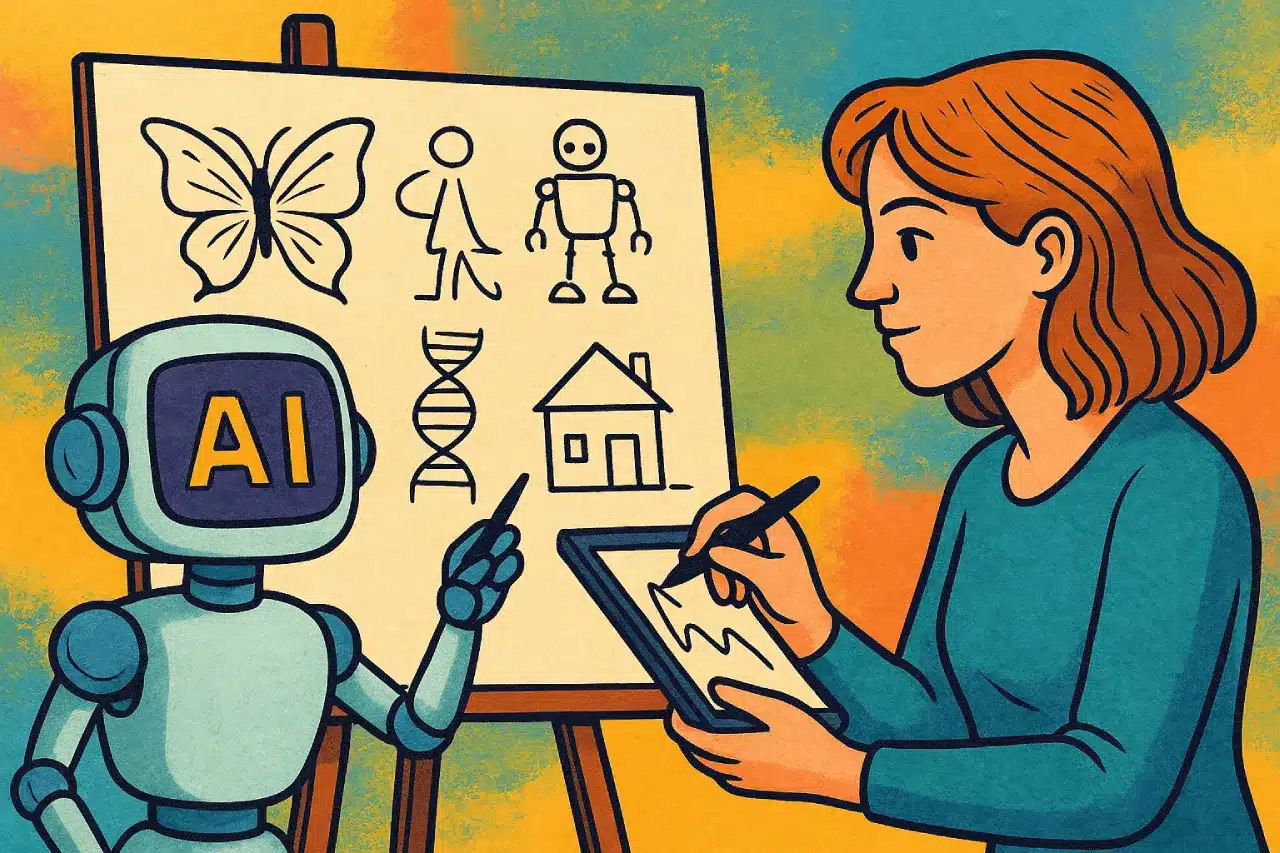
the decision of a japanese game studio of requiring aspiring artists to draw live during interviews to avoid fraud by Artificial intelligence has shaken the global industry. It is a drastic defense tactic, but its true value lies in the network of curiosities and connections that it establishes with the history of Japanese art. It’s not just a simple quality control. It is the resurrection of ancient fire trials, which demonstrate the depth of the conflict between technology and tradition. What secrets of traditional art are hidden behind this modern measure? We analyze it through unique connections.
The return to celluloid tests: the era of Dōga
This strict live drawing test, used today against AI, has an amazing parallel with the “golden age” of Japanese animation. Having seen the scene in historical documentaries, the pioneering studios subjected their new animators to brutal drawing tests in real time. This was key to Dōga Or intercalator animators, who had to maintain line consistency and speed under incredible pressure. This new examination is, in essence, a reactivation of that old fire test. The skill and speed of the human hand against the clock of machine efficiency.
The first-hand experience and the Japanese game studio
The studio, by forcing artists to show their workflow, looks for something that AI cannot replicate. The “first-hand experience” with industry tools. And it is that, fundamentally, it is not only about the final result, but, more importantly, of how you get to it. In fact, when I played with professional artists, I realized that an expert not only uses software like Clip Studio Paint or Zbrush; On the contrary, it has a rhythm, a shortcut mastery and a visible correction process that only the actual experience forges. Therefore, the Japanese game studio is de facto, auditing the workflow human, seeking devotion and discipline that are demonstrated in the execution, and not only in the final JPG file
the value of wabi-sabi Against the perfection of the algorithm
Similarly, to understand AI aversion in this culture, we must see “art” not only as a product. Instead, we must understand it as a trade (Shokunin). This distinction is crucial, since the live test highlights the connection with the aesthetics of the wabi-sabi, which celebrates beauty in imperfection, asymmetry and unique stroke. However, AI generates an algorithmic and sterile perfection. Therefore, in contrast, the mangaka o The digital artist leaves a stroke that is his creative “fingerprint”: a small glitch of humanity that AI cannot replicate. Ultimately, the study seeks that beautiful and inimitable error that differentiates art with soul from the image without history.
Conclusion: The aesthetics of error in studies
The growing use of automatic generators has introduced an unexpected challenge in arts contracting: Validate authenticity. Also, if an impeccable illustration no longer guarantees that there is an artist behind, then the process must change. And that is exactly what this Japanese study is anticipating.
The debate is just beginning. But for now, his policy sends a clear message: in times where AI can produce art with surprising precision, What distinguishes the real creator is the ability to prove it without intermediaries.