
a copy of the first volume of Demon Slayer: Kimetsu no Yaiba It has just been sold at auction for $420,000 yen ($2,600 dollars). It is not an isolated case or an exaggeration: the market for the first editions of Manga silently became one of the most surprising speculative phenomena in the world of collecting, and experts already compare it openly with cryptocurrencies. The most impressive thing is that this market is just beginning.
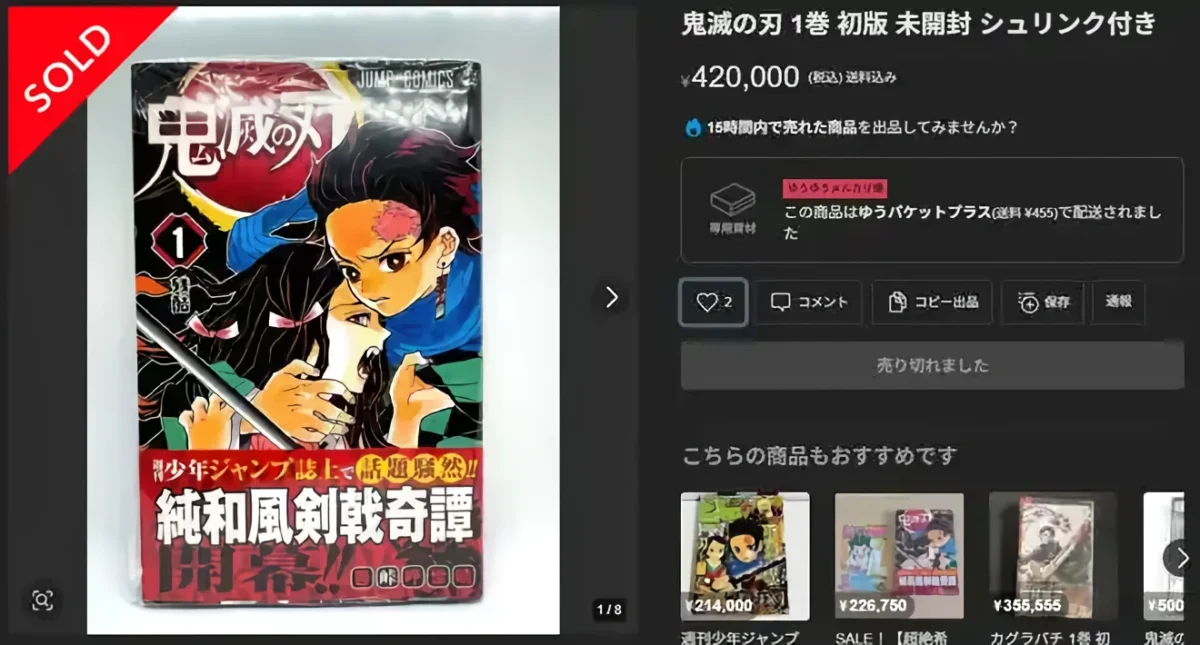
Why a 2016 manga is worth more than two thousand dollars today
volume 1 of Kimetsu no Yaiba It was published in Japan in June 2016. At the time it was simply the debut of a new title in Shōnen Jump — promising, but without anyone being able to anticipate that it would become one of the largest anime and manga franchises in history, with more than 150 million copies in circulation globally.
That distance between what it was worth in 2016 and what it represents today is exactly the equation that turns its first edition into a collectible object of desire. For those who bought it in a bookstore without much thought and kept it in perfect condition, that volume went from costing less than four dollars to worth what some earn in a month of work.
The market no one saw coming
For decades, manga collecting in Japan was dominated by local buyers with very technical criteria: printing errors, cover variants, editions with the Obi, the protective paper band, intact. It was a niche market, specialized, almost invisible from the outside.
What radically transformed it in the last five years was the arrival of foreign collectors and investors, especially United states, , Europe and Southeast Asia, which began to deal with the first manga editions exactly as they do with the first edition American comics or the letters of Pokemon: As assets with real revaluation potential.
According to experts in the Japanese market, the main reason for the increase in prices is that influx of foreign buyers with high purchasing power. Influencers and international celebrities accelerated the trend by displaying their collections on social networks, legitimizing the market before massive audiences that had never thought of a manga before as an investment.

The most cited case: the youtuber Logan Paul He paid more than $500,000 for the Shōnen Jump number that included the debut of Dragon BallA price that would have sounded absurd ten years ago and that today has its own market logic.
The pandemic and streaming effect that triggered everything
The rise of anime on streaming platforms during the 2020 pandemic introduced tens of millions of new people to the manga world. Many of those new fans, when looking for a physical connection with the works they discovered on the screen, turned to tangible objects: figures, artbooks and, above all, the original volumes.
This new demand, combined with the fixed supply of first editions printed years ago in limited quantities, created exactly the scarcity that triggers prices in any collectible market. a volume 1 of Demon Slayer In perfect condition, with original Obi, it is today a genuinely rare object. And rarity, in collecting, is the variable that weighs the most on the price.
Logan Paul, $500,000 dollars and the moment when everything changed
When Logan Paul appeared publicly with rare specimens of Shonen Jump and confirmed that he had paid more than half a million dollars for the number of the debut of Dragon Ball, something happened that collectible markets know well: validation by a massive figure turned something from a niche into a global trend.
That movement not only shot the prices of the old editions. He also laid eyes on the world over the entire rare physical manga market, including much more recent titles as Demon Slayer, , jujutsu Kaisen and Chainsaw Man, whose first volumes began to rise in price almost immediately.
Will it keep going up? What the experts say
The honest answer: Nobody knows for sure, and that uncertainty is part of what makes the market work like cryptocurrencies.
The arguments in favor of continuing to rise are solid: the digitization of the manga makes physical objects increasingly scarce and therefore potentially more valuable. The new generations who discover these works through the anime will continue to search for original objects. And the global interest in Japanese culture does not show signs of slowdown.
The arguments against also exist: speculative markets can be sharply corrected. If the big collectors who drive prices decide to sell at the same time, the values could fall as fast as they went up. And unlike unique works of art, manga are industrially produced objects, albeit in limited editions, which complicates their legitimacy as long-term luxury assets.
What is a fact: the market already exists, it already has real liquidity, and there are already people earning and losing significant money in it.
The first volumes that are on the radar right now
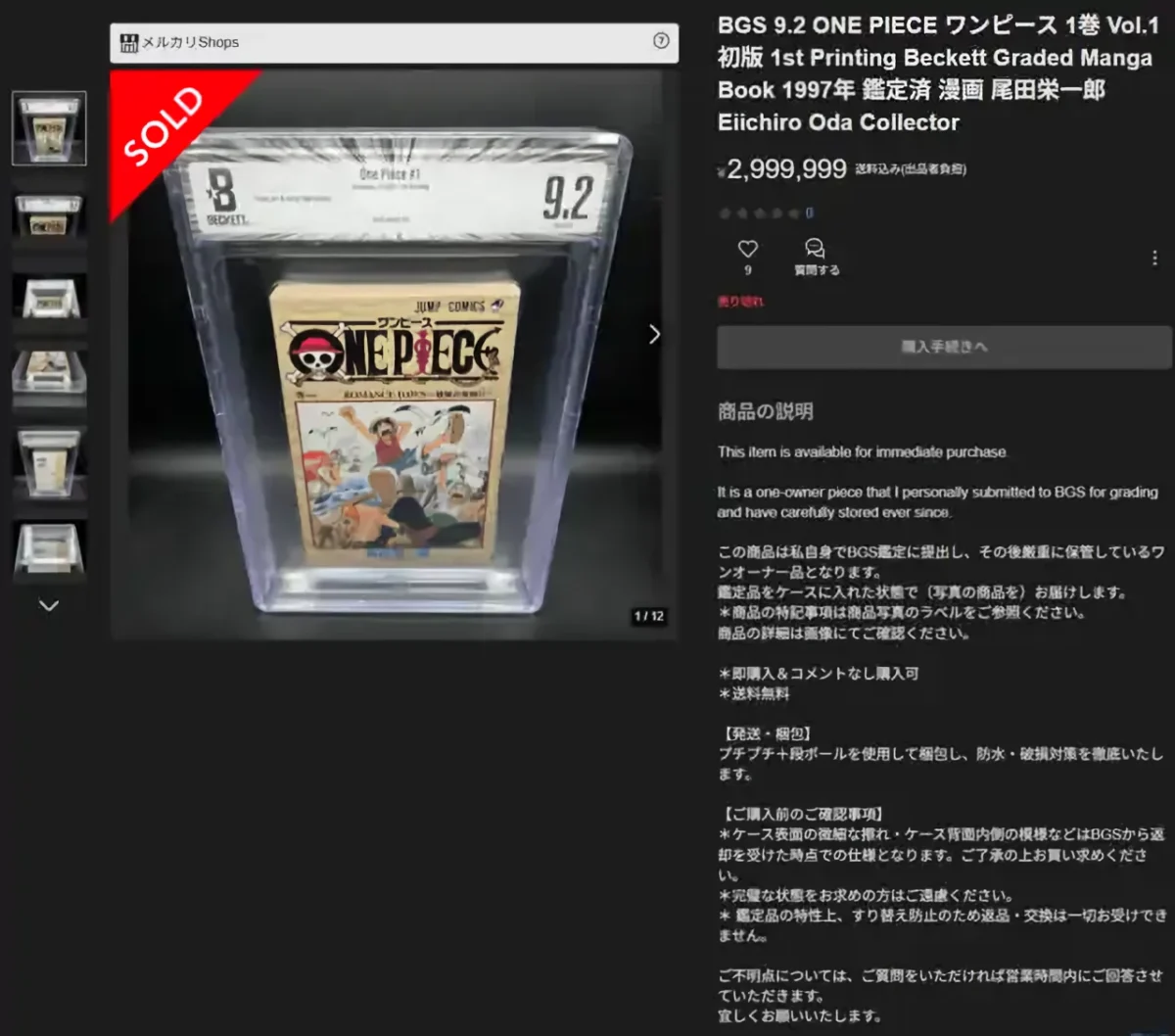
Beyond Demon Slayer, the atoms that global collectors follow with more attention are volume 1 of one piece of 1997 with prices that already reach five figures in dollars in good condition, the debut of Dragon Ball, the first volume of Naruto, and more recently the first editions of Jujutsu Kaisen and Chainsaw Man: more recent works but with global fandoms that could reproduce exactly the same phenomenon.
The lesson that this market is giving out loud: if you have a first volume of a series that exploded globally, in perfect condition, with all its original elements intact, it is probably worth much more than you think.
Source: Voce Sabia anime