In a market saturated with technological terms, differentiating the features that really make the difference on a screen can be a challenge. One of the most popular and sometimes confusing technologies is the QLED. Although many brands use it, not all screens that have this acronym offer the same image quality. If you are about to buy a new TV or simply want to verify the quality of the one you already have, this guide will help you identify if you have a real QLED at home.
The heart of a QLED: Quantum Dot technology
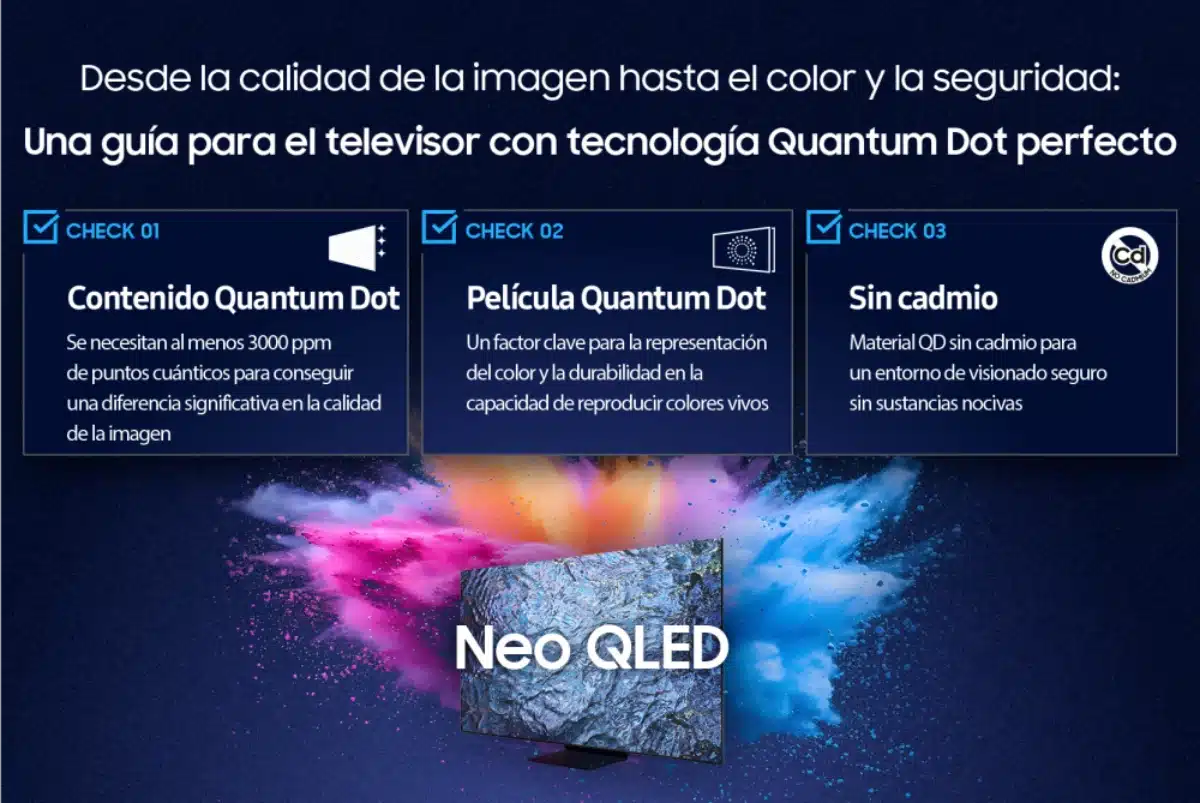
The secret behind an authentic QLED TV is not in marketing, but in science: Quantum Dots (Quantum Dots). These are incredibly small semiconductor particles that, when illuminated by a backlight (usually blue), emit pure and precise colors.
- How do they work? In a true QLED, the Quantum Dots are directly responsible for generating the red and green colors. The combination of this light with the blue background creates billions of shades with exceptional purity.
- The key difference: If a screen does not actively use quantum dots to create its color range, it cannot be considered a genuine QLED. It is simply an LED TV with some color improvement, but without the precision and vividness that defines this technology.
“100% color volume”: more than an advertising slogan
You’ve probably heard the term “100% color volume”, but what does it really mean? It’s not just about the number of colors a display can display, but about its ability to maintain the accuracy of those colors in any level of brightness.
Think of a deep red color. On a lower quality TV, that red can seem “washed” or pale in very bright scenes, or too dark and without detail in low-light scenes.
An authentic QLED is capable of reproducing 100% of the DCI-P3 color spectrum (the standard in the film industry). Samsung It was the first brand to receive the “100% color volume” verification from VDE, which ensures that your screens maintain color fidelity regardless of whether the brightness is at maximum or minimum. This translates into a realistic image full of nuances at all times.
How to verify it: look for certifications
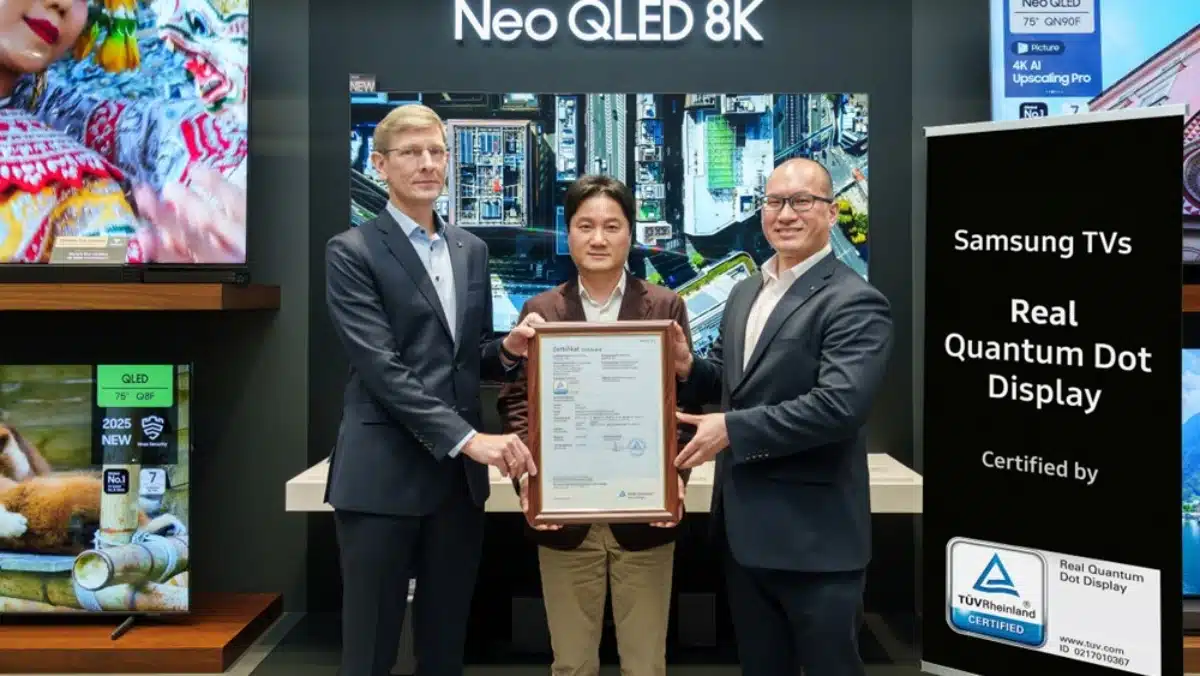
The most objective way to confirm that you are facing a real QLED is to seek seals of approval from independent organizations. One of the most prestigious TÜV Rheinland, a German certification body with worldwide recognition.
- “Real Quantum Dot Display” certification: This seal, which is held by Samsung’s QLED TVs, confirms that the screen has been subjected to rigorous tests that analyze its light spectrum. The results should show a clear and clear separation between the waves of red, green and blue light, which is the unmistakable signature of a structure based on quantum dots.
The next time you are in a store or research online, don’t just stick with the name “QLED” in the box. Ask for the color volume and look for certifications that support technology. At the end of the day, choose a brand as Samsung It gives you the peace of mind of investing in the original QLED technology and a truly superior visual experience.