Source: PEXELS
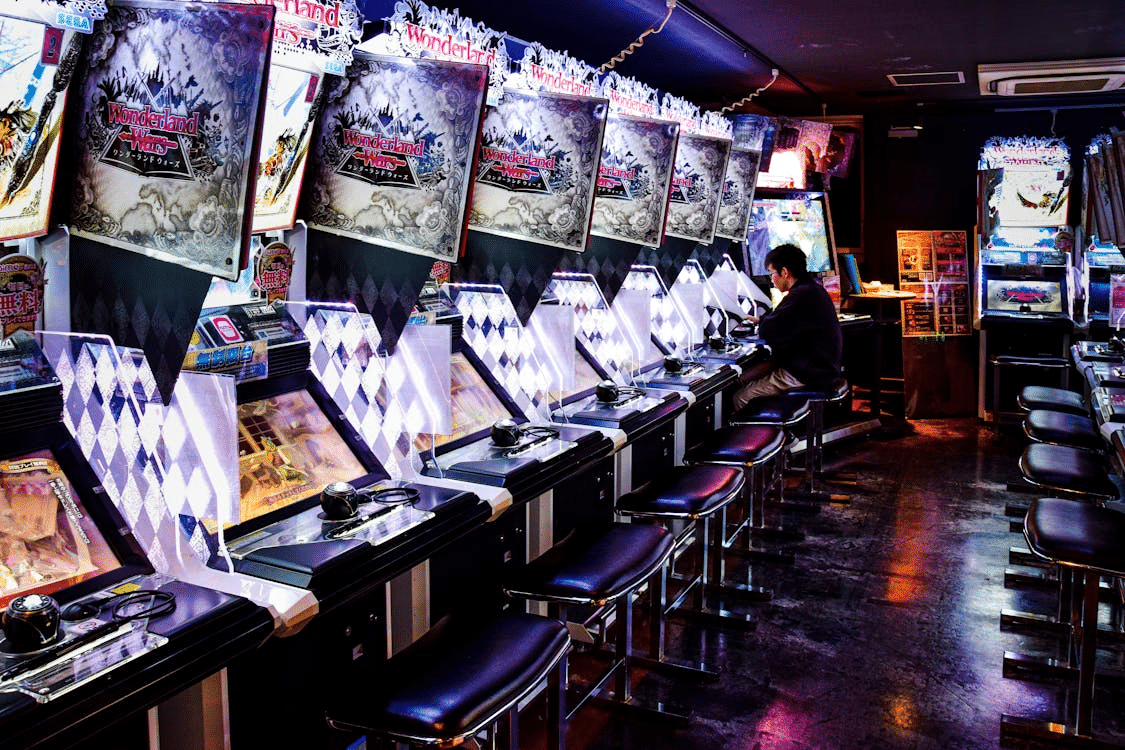
Anyone who has walked down a Japanese shopping street remembers the sound before any image: a metallic roar, millions of balls bouncing against nails, electronic music at full speed and, behind the glass, rows of motionless players in front of screens where Goku carries a Genkidama or Emilia smiles from a rendered forest in CGI. Pachinko is that, an impossible hybrid between vertical pinball, slot machine and audiovisual theater, and has been functioning as the back door of adult leisure in Japan for decades. The weird thing, and what matters to us here, is how a pastime with almost a century on it ended up becoming the noisiest multimedia showcase that the anime industry has.
The origin of pachinko is not as Japanese as one would expect. The machine descends from the Corinthian Bagatelle, an American children’s game from the twenties that arrived in Nagoya and there he found what he never had in the West: a culture willing to treat him with adult patience. In the thirties the board was put upright, in 1948 the first commercial hall opened and the post-war did the rest. There was surplus of steel balls and little cheap leisure alternative. From there to the modern machine there is a technological leap that is explained in the eighties, when the manufacturers discovered that the LCD screen was the true heart of the device, not the nails. A recent analysis of the sector makes it clear that from that moment the animations ceased to be an ornament to become the sales argument.
The alliance with the anime
This is where the thing gets interesting for any otaku. What began as specific collaborations with veteran franchises (Hokuto no Ken, Lupin III, Saint Seiya, Cutie Honey) ended up being a closed ecosystem in which practically every modern machine carries a recognizable IP. Evangelion, Detective Conan, the entire Gundam saga, Sanyo Bussan’s cr umi monogatari with the famous protagonist Marin, and more recently Re:Zero, Konosuba, Saekano, Uma Musume or Oreimo. They are not amateur patches. They are expensive licenses, with original short films that the studios themselves produce only to insert them between turning and turning.
The agreement benefits both parties and that explains why it has not been broken despite the fall in the sector. Salons need new visual stimulation every few months (a machine lives on average about ninety days in the room before being replaced) and the studios charge royalties for properties that, in many cases, have been out of issue for years.
An anime that doesn’t sell even a Blu-ray can continue to generate income for a decade thanks to a machine in a lost Saitama room. Animation pays literally. This logic of fragmentation, by the way, also spreads the way in which players trace information parallel to the game itself: guides of odds, catalogs of machines, comparatives and even compilations of Casino Free Spins Bonuses When they look at the field of digital entertainment outside the room, everything circulates through scattered aggregators that everyone consults on their own. Can pachinko then be considered a legitimate actor in the anime industry?
The profile of who plays
The consumer portrait is the most counterintuitive point in this story. As much as the covers of the machines are populated with recently designed Waifus, who sits in front of them is rarely young. The official data of the Japanese sector indicates that about 75% of the public is male and that the largest group are men from sixty years onwards, with a quota of around 21.5% of the total number of players. The twentysomething strip is residual. The adolescent, directly non-existent.
Macro numbers accompany this aging. The market moved about 35 billion yen in 2005, its historic peak, and is around 15.7 billion in 2023, less than half. Operating rooms have gone from more than 18,000 in the late 1990s to just under 7,000 today, according to The latest published data on market contraction. The active player base, estimated at around 7.2 million, continues to shrink year after year. And, despite everything, Pachinko invoices more than four times what moves the official anime industry in Japan.
That disproportion explains why collaborations with popular franchises have intensified in the last decade. Traders know that their loyal customer ages and is not replaced, so they try to attract a younger audience with nostalgic licenses or with recent successes. The strategy has failed to stop the fall. Nor has he tried too convincingly, because Japanese regulation limits the creative margin and manufacturers continue to prioritize the retiree who always sits on the same machine.
There is a sociological nuance that is usually overlooked and that deactivates a good part of the usual stigma. The average player does not go to the salon to get rich. He is going to disconnect, to be stunned by three hours of white noise with graphics, to practice what the critic Donald Richie once described as a kind of balanced Zen. Japanese houses are small, long working hours and their own mental space is scarce. Pachinko, with all its sensory bombardment, paradoxically anesthesia.
The uncertain future
That is why the question about the generational change does not have a clear answer. Manufacturers bet on increasingly sophisticated themed machines, exclusive animation short films, integrations with social networks and clean, non-smoking rooms and with low-risk sections (1 yen per ball) designed for the occasional visitor. Some Akihabara venues come to schedule events coinciding with birthdays of characters or seiyuus, obvious nods to the Otaku fandom that do not always translate into regular clients. We already saw it when commenting The unexpected return of Oreimo in Pachinko format in 2025, a case that summarizes the contradiction well: there are franchises that first return to a machine than to a simulcast.
The legalization of integrated casinos, with the premiere scheduled in Osaka for 2029, also does not promise to save the sector. The experts consulted by the specialized press insist that the two audiences barely overlap, just like Tokyo Disneyland never emptied the neighborhood arcades. Then there is an industry that lives from a client that does not renovate, paying millionaire licenses to an medium whose fans rarely step on their rooms. A fascinating decoupling, very Japanese, who has been announcing his ending for thirty years without producing it.